"The path of my departure was free". (97)
Victor's creature has also been exposed to a piece of Percy Shelley's work: Mutability. In the poem, there is a similar line: "The path of its departure still is free." The poem speaks about joy and sorrow and how a person may experience either one of those in a lifetime. Later on in the novel, Frankenstein speaks of his unhappiness and sorrow. And also questions why he is so "hideous".
Wednesday, August 19, 2009

Tuesday, August 18, 2009
Looks aren't everything...
 "I had admired the perfect forms of my cottagers---their grace, beauty, and delicate complexions: but how was I terrified, when I viewed myself in a transparent pool!" (84)
Victor is a man of appearance. Caring too much about his looks, and too much about what others may look like. Instead of seeking the true personality and views of people, Mary Shelley has Victor more concerned with their form. The monster that he creates is frightening to him because it doesn't have a beautiful form, or stunning appearance. The creature is ironic, because it is exactly the opposite of what Victor wanted; He was in seek of the perfect man, and instead created a monster.
The Moon is the Mother
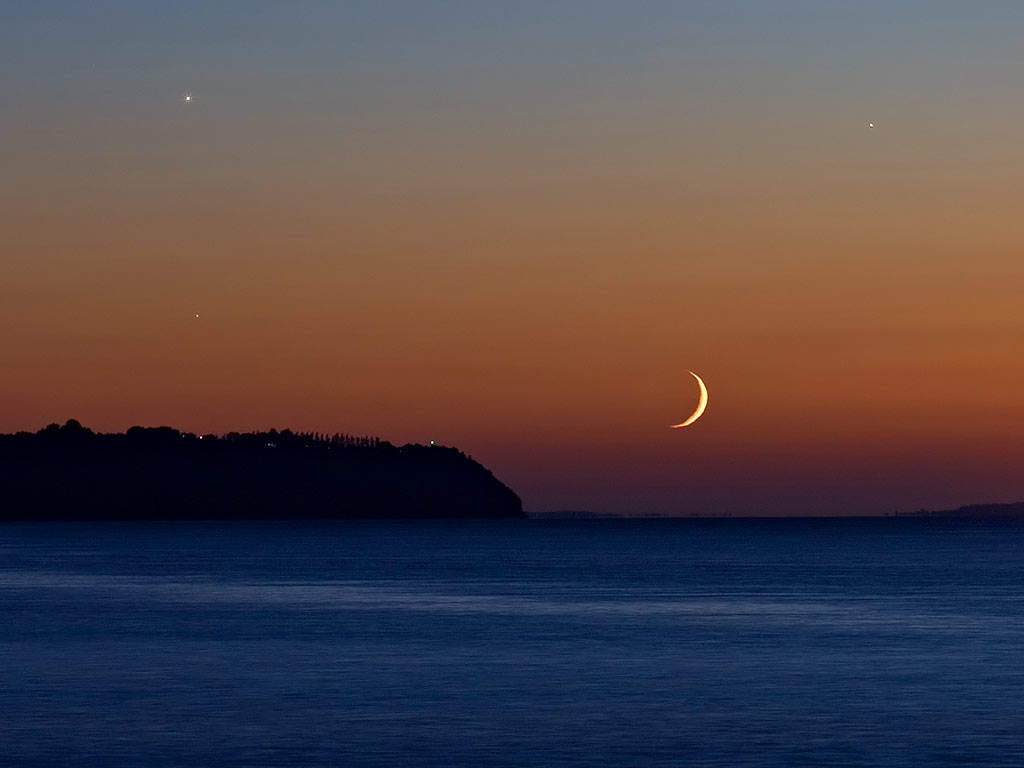
"Soon a gentle light stole over the heavens, and gave me a sensation of pleasure. I started up, and beheld a radiant form rise from among the trees." (75)
The "radiant form" that is mentioned, is the moon. Shelley makes it so the moon is a representation of the mother that Victor and his creature never had. Like a mother, you can always count on the moon to be there; every night you can look up and count on it being there. Since Victor and his creature never had a mother, to them the moon holds that same security and feeling of dependability.
http://antwrp.gsfc.nasa.gov/apod/image/0509/MoonRiver_ouellet_f.jpg
The "radiant form" that is mentioned, is the moon. Shelley makes it so the moon is a representation of the mother that Victor and his creature never had. Like a mother, you can always count on the moon to be there; every night you can look up and count on it being there. Since Victor and his creature never had a mother, to them the moon holds that same security and feeling of dependability.
http://antwrp.gsfc.nasa.gov/apod/image/0509/MoonRiver_ouellet_f.jpg
Sea of ice (Frankenstein)
 "For some time I sat upon the rock that overlooks the sea of ice." (71)
The Sea of ice is one of the most desolate and secluded places in the world. There is absolutely no sign of any life or vegetation. Shelley made the reader feel as though this place was symbolic of Victor's wishes to be alone to reflect.
http://media-cdn.tripadvisor.com/media/photo-s/01/17/2d/2f/mer-de-glace.jpg
Percy Shelley reference (Frankenstein)

"We rest; A dream has power to poison sleep. We rise; One wandering thought pollutes the day. We feel, conceive or reason, laugh or weep, Embrace fond foe, or cast our cares away; It is the same: For, be it joy or sorrow, The path of its departure still is free. Man's yesterday may ne'er be like his morrow; Nought may endure but Mutability!" (71)
Mary Shelley makes a reference to the poem Mutability by Percy Shelley. Rumour has it that part of the reason this poem is included in the novel was to sort of advertise it. Percy Shelley's work was not doing well at this time, and Mary Shelley thought the reference may help out his works. However, I believe the fragment of the poem was for more than advertisement piece. The poem talks about how fast life goes by and how it is ever changing. Throughout Frankenstein there are many changes within Victor as well as his creature, as well as many events along a normal life journey.
"Mutability Analysis Percy Bysshe Shelley : Summary Explanation Meaning Overview Essay Writing Critique Peer Review Literary Criticism Synopsis Online Education." Writing Workshop, or something. Web. 07 Sept. 2009. http://www.eliteskills.com/analysis_poetry/Mutability_by_Percy_Bysshe_Shelley_analysis.php.
Mary Shelley makes a reference to the poem Mutability by Percy Shelley. Rumour has it that part of the reason this poem is included in the novel was to sort of advertise it. Percy Shelley's work was not doing well at this time, and Mary Shelley thought the reference may help out his works. However, I believe the fragment of the poem was for more than advertisement piece. The poem talks about how fast life goes by and how it is ever changing. Throughout Frankenstein there are many changes within Victor as well as his creature, as well as many events along a normal life journey.
"Mutability Analysis Percy Bysshe Shelley : Summary Explanation Meaning Overview Essay Writing Critique Peer Review Literary Criticism Synopsis Online Education." Writing Workshop, or something. Web. 07 Sept. 2009. http://www.eliteskills.com/analysis_poetry/Mutability_by_Percy_Bysshe_Shelley_analysis.php.
Valley of Champounix (Frankenstein)

"My father, who saw the unhappiness that was painted in my face only an exageration of that sorrow which I might naturually feel. . . he now proposed that we should all make an excursion to the valley of Champounix." (68)
The valley of Champounix is the valley that lies near Mont Blanc in France. It is told that Mary and Percy Shelley visited this spot while in the middle of writing Frankenstein. Victor's father suggests they go there to free some built up stress and happiness because it is so surine there. The suriness of the valley of Champounix may also have been the reason why Mary Shelley went there while writing the novel perhaps for inspiration.
"The valley of Chamounix." English Department - University Of Pennsylvania. Web. 07 Sept. 2009. http://www.english.upenn.edu/Projects/knarf/V2notes/valley.html.
Monday, August 17, 2009
Mont Blanc (Frankenstein)
"During the short voyage I saw the lightnings playing on the summit of Mont Blanc in the most beautiful figures." (52)
Mont Blanc is the highest peak in Alps. This peak is significant later on the book when Victor and his monster meet near Mont Blanc. Although at a glance it seems that Victor and the creature he created are polar opposites, they end up having a lot in common. Mary Shelley reveals their love for nature, and meeting near this peak in the Alps illustrates a passion they share. However, Victor goes into the wilderness to escape from all of his troubles while his monster goes out of the public eye to try and soothe his feeling of rejection.
"YouTube - Top of the Mont Blanc." YouTube - Broadcast Yourself. Web. 07 Sept. 2009. http://www.youtube.com/watch?v=g0FoBOCOuhE&NR=1.
Mont Blanc is the highest peak in Alps. This peak is significant later on the book when Victor and his monster meet near Mont Blanc. Although at a glance it seems that Victor and the creature he created are polar opposites, they end up having a lot in common. Mary Shelley reveals their love for nature, and meeting near this peak in the Alps illustrates a passion they share. However, Victor goes into the wilderness to escape from all of his troubles while his monster goes out of the public eye to try and soothe his feeling of rejection.
"YouTube - Top of the Mont Blanc." YouTube - Broadcast Yourself. Web. 07 Sept. 2009. http://www.youtube.com/watch?v=g0FoBOCOuhE&NR=1.
Subscribe to:
Posts (Atom)

